
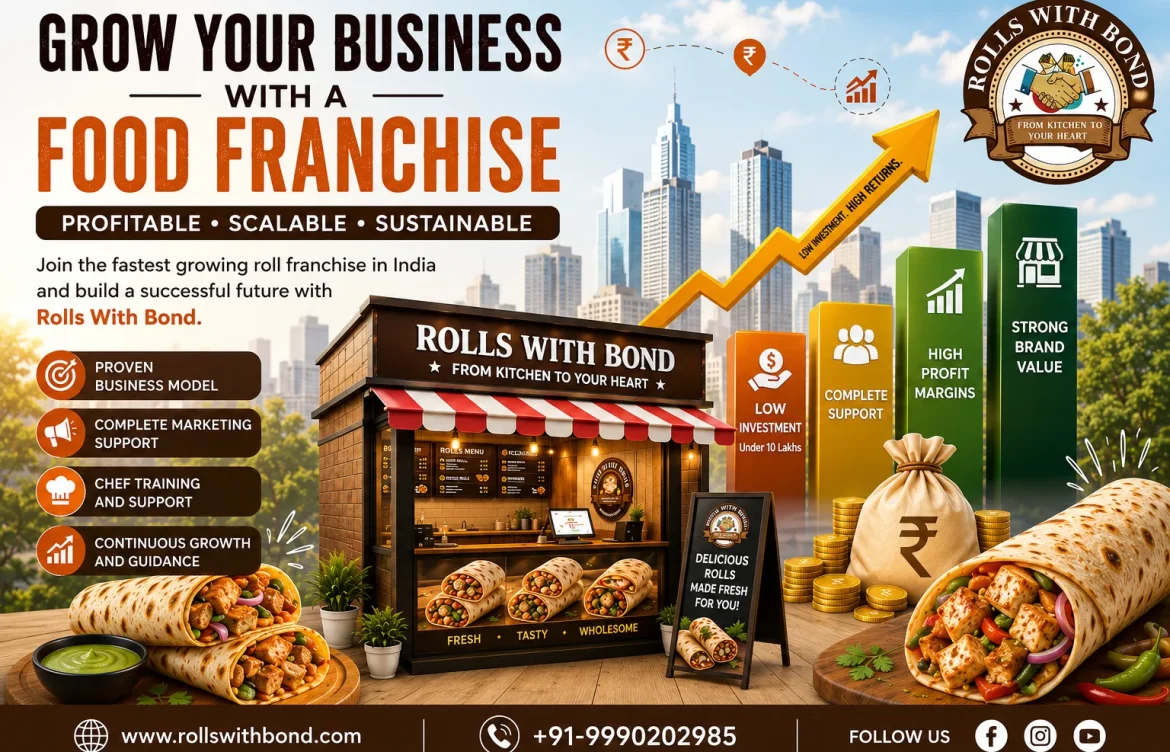
What Makes One Food Franchise Profitable and Another Fail? A Complete Guide for Investors Looking for a Food Franchise Under 10 Lakhs In India
Because people never stop eating, the food industry has always drawn entrepreneurs. Despite operating under a well-known name, some franchise owners struggle to thrive, while others quickly recoup their investment and become extremely profitable enterprises.
If you are planning to invest in a Food Franchise Under 10 Lakhs in India. Understanding the difference between failure and success in India can help you avoid making expensive blunders.
Many investors think that selecting a well-known brand will inevitably result in profits. Sadly, that is untrue. There are numerous instances in the Indian food franchising business where well-known companies have failed in particular areas while small brands have proved quite profitable.
So why does one food franchise in India succeed while another fails?
Let’s examine the important elements.
The Reality of the Food Franchise Industry
The food service sector in India is expanding quickly. Quick-service restaurants and takeaway concepts are in high demand due to urbanisation, rising disposable incomes, internet meal delivery services, and shifting lifestyles.
Thousands of business owners are now looking for the best food franchise in India as a result of this expansion. Nevertheless, a lot of investors neglect to assess the entire business plan in favour of concentrating solely on franchise fees and anticipated income.
Selling food is only one aspect of a successful food franchise. Operations, marketing, client retention, cost management, and knowledge of local markets are all important.
Brands that are adept at these components consistently achieve success.
Factor #1: Strong Unit Economics
Unit economics is the primary cause of one franchise’s success while another fails.
Understanding how much money comes in and goes out is all that unit economics entails.
Even if a franchise makes ₹5 lakh a month, its profitability is still low if its expenses take up the majority of that money.
Successful franchises prioritise:
- Reasonably priced rentals
- controlled food expenses
- Effective labour
- Elevated gross margins
- Recurring clients
Expensive interiors and upscale stores draw a lot of investment. However, because the initial investment is affordable and operating expenses are kept under control, a wise low cost food franchise in India frequently yields more profitability.
Always enquire before making an investment:
- What is the monthly average revenue?
- How much does food cost?
- What is the profit margin on average?
- What is the duration of the break-even point?
The responses demonstrate the viability of the franchise model.
Factor #2: Location Selection
In the wrong place, even the greatest culinary idea might fail.
First-time investors frequently make the error of selecting a location based more on personal desire than on consumer demand.
Before suggesting locations, successful franchise brands carry out in-depth market research.
Among the important factors are:
- density of the population
- population of students
- Professionals who are employed
- Demand for delivery
- The existence of competitors
- Parking is available.
- Visibility
For a roll franchise, a location that is ideal for a café might not be suitable.
One of the most important factors in determining success is knowing how customers behave in a certain location.
For this reason, before opening a new location, seasoned franchise businesses put a lot of effort into researching local markets.
Factor #3: Marketing Support
The presumption that patrons will show up as soon as the store opens is one of the main causes of the failure of many food franchises.
The opening day is only the start.
Sales inevitably decrease in the absence of ongoing marketing.
A profitable Food Franchise In India must have:
- Assistance with digital marketing
- Management of social media
- Regional advertising
- Management of online reputation
- Campaigns to acquire customers
- Repetitive customer tactics
While many franchise businesses offer branding, the franchise owner is solely responsible for marketing.
The majority of investors are not marketing specialists, which causes issues.
Through organised marketing activities, the most prosperous franchise systems consistently assist their partners in attracting new clients.
Factor #4: Operational Support
The food business is operationally intensive.
Issues arise every day:
- Management of employees
- Control of inventory
- Consistency in food quality
- Consumer grievances
- Coordination of vendors
Franchise owners frequently experience overload in the absence of adequate support.
Many people invest in a Food Franchise Under 10 Lakhs In India because they want a business rather than a full-time job.
Nevertheless, after introduction, several franchise systems offer very little support.
This frequently turns into the main cause of failure.
Instead of going away after receiving franchise fees, a successful franchise should continue to offer assistance.
Factor #5: Chef and Staff Training
Customer loyalty is a result of food quality.
Instead of coming back because they saw a logo, customers come back because they like the experience.
A brand’s reputation can be swiftly harmed by a single chef with inadequate training.
Standardised recipes and training programs are established by prosperous franchisees to guarantee uniformity throughout all locations.
For instance, Rolls With Bond’s business support framework includes hiring, training, and management assistance for chefs. This helps ensure meal consistency and lessens the workload for franchise partners.
Investors without any prior restaurant expertise find such methods very beneficial.
Factor #6: Understanding Customer Psychology
Every market is unique.
Affordability may be a top priority for consumers in a certain city.
Premium quality could be valued in another market.
While some consumers place a higher value on convenience and flavour, others react strongly to deals and discounts.
Franchise owners often fail because they don’t grasp local demand and instead employ generic techniques.
Successful franchises continuously analyze:
- Consumer purchasing habits
- Preferred price points
- Timings of peak orders
- Preferences for products
- Provide efficacy
Businesses may make more informed decisions thanks to this data-driven strategy.
A franchise’s profitability increases dramatically and customer acquisition is made easier when it understands its target market.
Factor #7: Cost Management
Revenue is the focus.
Profits are determined by costs.
If expenses are not kept under control, a franchise with strong sales may nevertheless collapse.
Common cost-related problems include:
- Excess food wastage
- High labour costs
- Inadequate inventory control
- Unplanned discounts
- Costly procurement
The Best Food Franchise In India is often not the one generating the highest revenue.
It is the one that makes the most money overall.
Long-term enterprises are strengthened by brands that actively assist franchisees in managing expenses.
Without boosting sales, effective costing systems can significantly increase earnings.
Factor #8: Competitor Analysis
It’s risky to ignore rivals.
Successful food businesses keep a close eye on their local rivals.
Questions that should be asked regularly include:
- What goods are rivals advertising?
- Which price techniques are they employing?
- Which deals are drawing clients?
- What problems from customers are showing up in reviews?
Businesses are able to quickly adjust when they comprehend the competition.
In competitive marketplaces, franchises that offer continuous competitor analysis give their partners a major edge.
Factor #9: Customer Retention
Attracting new clients becomes an obsession for many franchise owners.
Profits, however, come from returning clients.
It is typically more costly to acquire new customers than to keep current ones.
Profitable franchises focus on:
- Customer delight
- Rewards schemes for retention
- Consistent quality
- Direct interaction
- Quick service
Regular customer return reduces marketing expenses and boosts profitability.
This strengthens the stability of the company and produces consistent monthly revenue.
Factor #10: Franchise Partner Success Model
The mindset of the franchise company is one of the most overlooked elements.
Some businesses concentrate on franchise sales.
Some concentrate on assisting franchisees in becoming successful.
There is a huge difference.
Before investing, ask:
- After launch, what happens?
- How frequently does the business offer assistance?
- Do they carry out audits?
- Do they help with advertising?
- Do they keep an eye on profitability?
The responses indicate whether the business cares about your long-term success.
Success or failure can frequently be determined by a robust support network.
Why Many Food Franchises Fail Despite Low Investment
Many entrepreneurs assume that choosing a Low Cost Food Franchise In India automatically reduces risk.
Unfortunately, low investment does not guarantee success.
Common reasons for failure include:
Lack of Operational Knowledge
A lot of investors don’t know how the food industry operates on a daily basis.
Poor Franchise Support
Some franchisors simply offer assistance during the initial stages.
Wrong Location
A weak market makes it difficult for even the best ideas to succeed.
Weak Marketing
Consumers cannot purchase from a business they are unaware of.
Inconsistent Food Quality
Customers can be permanently lost after a negative experience.
High Operational Costs
Profitability is rapidly destroyed by unchecked spending.
What Smart Investors Look for Before Choosing a Food Franchise Under 10 Lakhs In India
Before making an investment, evaluate these factors carefully:
Brand Strength
Is the idea appealing and expandable?
Support System
Does the franchisor offer continuing support?
Marketing Framework
How will clients be found?
Training Structure
How are chefs and employees trained?
Profitability Focus
Does the business actively contribute to higher margins?
Local Market Understanding
Does the brand change in response to consumer behaviour?
Long-Term Growth Potential
Is the company able to grow over time?
These enquiries aid in distinguishing between dangerous investments and real prospects.
How Rolls With Bond Addresses Common Franchise Challenges
Rolls With Bond’s emphasis on long-term partnerships rather than straightforward franchise sales is one of the reasons why many investors view it as one of the newest prospects in the Indian food franchise market.
The company follows a Lifetime Support Model that includes:
- Hiring, training, and management assistance for chefs
- Full-service marketing administration
- Analysis of competitors
- Frequent audits
- Guidelines for costing and profitability
- Planning for offers and promotions
- Analysis of consumer behaviour
- Monitoring food safety and quality
- Monitoring customer growth
Franchise partners can concentrate on business expansion while experiencing less operational stress thanks to this strategy.
Strategies are modified according to regional consumer behaviour and demand trends rather than applying the identical approach to every market.
For first-time entrepreneurs searching for a Food Franchise Under 10 Lakhs In India, this kind of support can significantly reduce the learning curve.
Final Thoughts
Rarely does chance determine whether a franchise is successful or unsuccessful.
Strong unit economics, efficient marketing, operational support, customer comprehension, cost control, and reliable execution are typically what lead to success.
If you are evaluating a Food Franchise In India, avoid focusing solely on franchise fees or projected sales.
Look deeper.
Examine the franchisor’s training procedures, profitability systems, support system, and long-term dedication.
The Best Food Franchise In India is not necessarily the biggest brand. It is the brand that actively helps its franchise partners succeed every day.
For entrepreneurs seeking a Low Cost Food Franchise In India, choosing a franchise that offers ongoing support, market insights, and profitability management can often be the difference between merely owning a business and building a truly successful one.